

Source: Jinshi Data
At 9 a.m. Beijing time on Thursday, US President Trump delivered a national address, issuing an "important update" on the Iran issue.
In his speech, Trump claimed that the U.S. military had achieved a swift and decisive victory . He emphasized that core strategic objectives were nearing completion , stating, "We are going to get the mission done, and we are going to get it done very quickly. We are very close."
He mentioned that most of Iran's leaders are dead. The Iranian navy no longer exists, the air force is in ruins, and the command and control capabilities of the Islamic Revolutionary Guard Corps are being destroyed.
He stated that Iran had hoped to produce as many missiles as possible, and military action had significantly hampered Iran's ability to acquire nuclear weapons. The Iran nuclear deal was a flawed agreement and should never have been reached. "Iran possessing nuclear weapons is an intolerable threat."
He stated that Israel would not exist without withdrawing from the Iran nuclear deal. Furthermore, Iran was stockpiling conventional ballistic missiles that could soon have reached "the continental United States, Europe, and virtually anywhere else on Earth." "We will never allow Iran to possess nuclear weapons. We will never do so as long as Iran remains a state sponsor of terrorism. Iran possessed some weapons that nobody believed they possessed, and we destroyed those weapons."
Trump revised the death toll from the Iranian protests to 45,000, up from his previous estimate of 32,000.
Trump said that, thanks in part to Venezuelan oil and gas , the United States is no longer dependent on the Middle East . " We don't need oil from the Middle East. We're helping them."
Regarding concerns about oil prices, Trump stated that the recent rise in gasoline prices is a "short-term" phenomenon due to Iran's attacks on oil tankers. Oil production will soon increase significantly. The United States has never been more economically prepared. "We didn't need the Strait of Hormuz in the past, and we don't need it now. Once the conflict is over, the Strait will naturally open."
Trump reiterated the timeframe, saying, "In the next two to three weeks, we will deliver a heavy blow to them. We are on track to address all of America's military concerns as quickly and very quickly as possible. Regime change was not part of our plan, but it happened. " He threatened to send Iran back to the Stone Age. "If there is no deal, we will strike Iranian power plants."
Trump concluded by emphasizing that the objective is clear: to destroy Iran's ability to threaten the United States and to cripple its defense industrial base. The U.S. has multiple options for targeting Iranian oil, including seizing key energy facilities. Trump thanked Middle Eastern allies, stating that the U.S. will not allow them to be harmed.
It is worth noting that Trump did not announce the withdrawal from NATO . Previously, some had predicted that Trump might use this opportunity to criticize NATO allies for not participating in the fight against Iran.
U.S. stock index futures fell during Trump's speech on the war with Iran. S&P 500 futures fell as much as 0.5%. Asian stock markets turned lower, with the MSCI Asia Pacific index extending its losses to 0.5%. The Nikkei 225 index gave back its earlier gains and is currently down 0.4%.
U.S. Treasury bonds and Japanese government bonds fell. The yield on the 10-year U.S. Treasury note rose 3 basis points to 4.35%. The yield on the 30-year Japanese government bond rose 2.5 basis points to 3.640%.
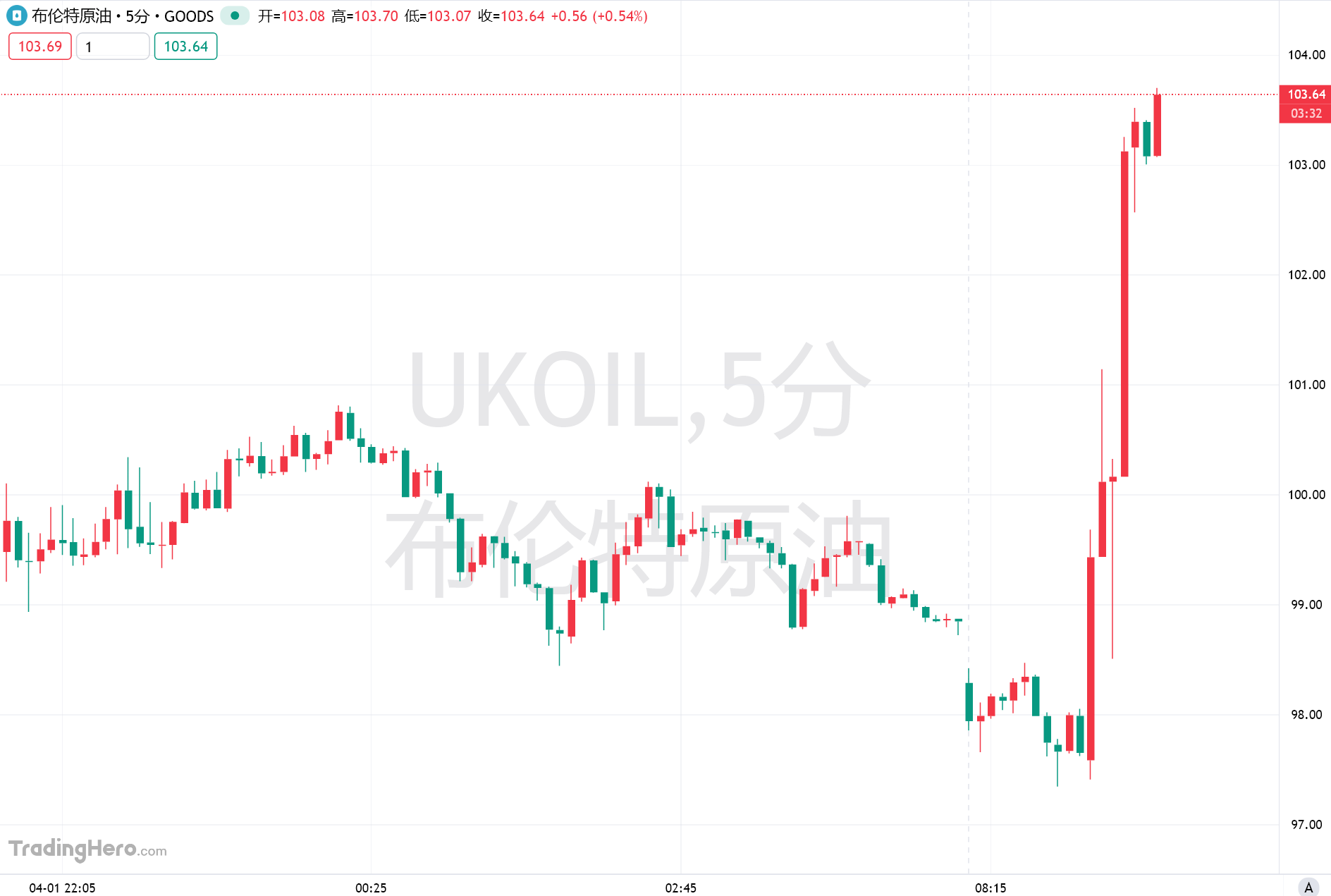
Oil prices continued to rise after Trump threatened to strike Iranian energy facilities if no deal was reached. WTI crude oil broke through $103 per barrel, up more than 4% on the day. Brent crude oil rose $4 to $102.86 per barrel, a gain of 4.06%.
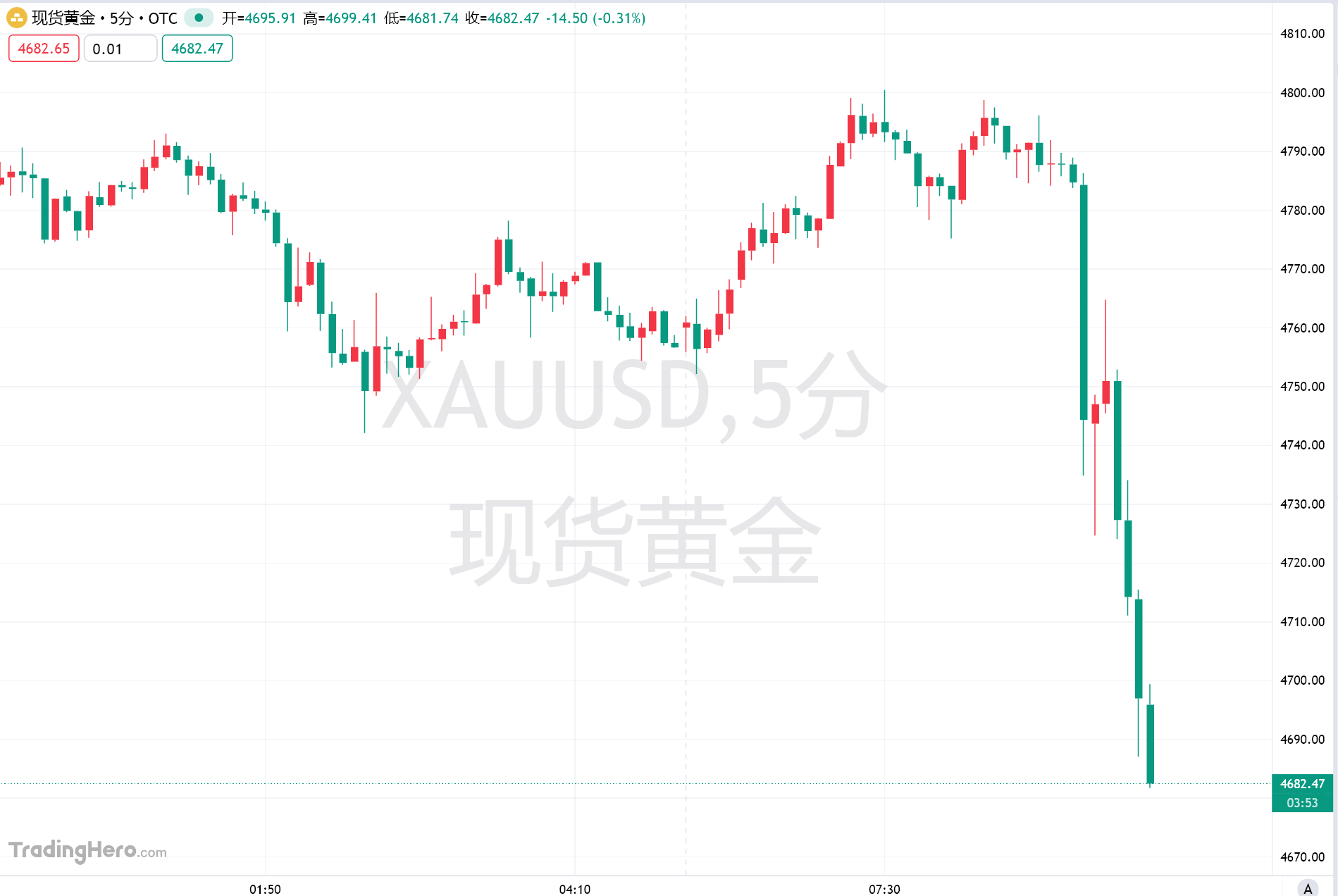
International spot gold and silver prices plummeted after Trump hinted at a potential escalation of military action in the near term. Spot gold fell below $4,700 per ounce, a drop of over 2% on the day. Spot silver fell more than 3% on the day, currently trading at $72.54 per ounce. New York silver futures fell below $73 per ounce, down 4.13% on the day.
This speech highlighted the immense pressure Trump faces to clarify the war's objectives to the public and to find an "exit strategy" for a conflict that has entered its fifth week and is becoming increasingly difficult to manage. Notably, the speech in some respects resembled an initial mobilization rather than a post-war summary . Currently, the Strait of Hormuz, which carries one-fifth of the world's seaborne oil, has been largely blocked since the outbreak of the conflict, becoming a major economic bottleneck. While Trump continues to insist that the energy shock will ease after the war, the administration has yet to clarify how it will persuade Iran to reopen the strait.
Derek Wallbank, senior editor of U.S. Economy and Government, noted, "If you've been listening to the president's speech for the past week or so, there isn't much new to hear tonight."
He explained the rationale for the US military action against Iran, promising the war would end soon while stating that the US would continue its strikes against Iran. The timeline remained unchanged: two to three weeks. He again urged countries reliant on the Strait of Hormuz for energy to take action to reopen the strait.
Reporter Abhishek Vishnoi points out that Trump's statement that countries reliant on the Strait of Hormuz must address the issue increases the likelihood of a persistent oil risk premium, even with a ceasefire, persistently high global inflation, and a cautious outlook for non-US assets, particularly in emerging markets and oil-importing countries.
Trump offered no new details or indication of a lasting solution to the Strait of Hormuz, which would disrupt the oil market. Instead, he reiterated past rhetoric, urging countries that rely on the waterway for oil flows to take “belated courage” to address the issue.
Clara Ferreira Marques of Bloomberg stated, “In the hope of overcoming experience, some oil traders have been looking for clarity in Trump’s speech. He offered no direction, repeated past statements, and conflated bluster and threats with the prospect of an impending end. This pushed up Brent and WTI crude prices. Despite the president’s comments today, there is little evidence that the Strait of Hormuz is open naturally. In fact, Iran is moving forward with its plan to establish a toll system—formally creating a structure that could strengthen the country’s control over the narrow waterway.”
For oil traders, producers, and users, the main takeaway from Trump's remarks is that the global oil supply crunch triggered by Iran's closure of the Strait of Hormuz could continue into April. According to earlier statistics from Bloomberg, each day the strait is closed results in a loss of approximately 11 million barrels.
Nick Twidale, chief market analyst at AT Global Markets, said, "Investors are clearly not taking this seriously, and there may be more downside for global markets today. Overall, I think this key update—that he will strike Iran in the coming weeks, despite his statement that the war will end soon—is a huge negative for the markets. "