
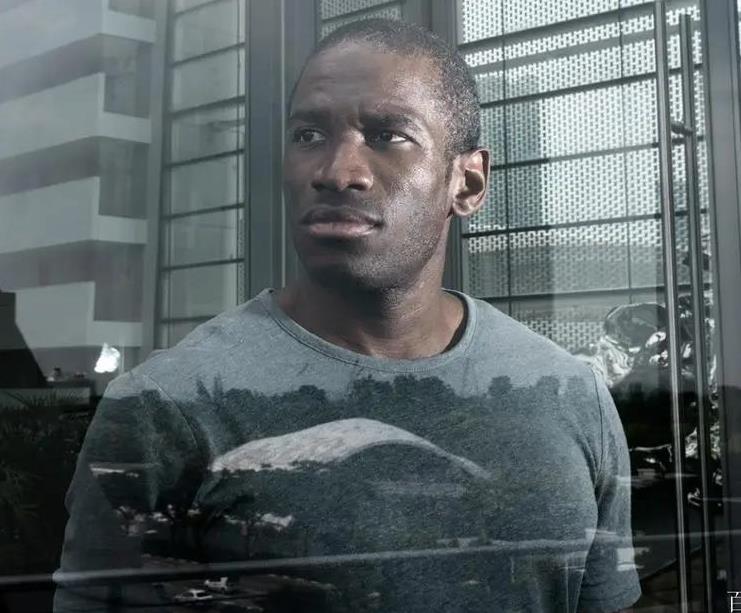

Author: Anthony Pompliano
Compiled by: Plain Language Blockchain

What makes Bitcoin truly valuable? Arthur Hayes offers a soul-searching answer: without retail users, Bitcoin is worthless.
In this rare and in-depth dialogue, Arthur Hayes, Chief Investment Officer of Maelstrom and former founder of BitMEX, offered his characteristically sharp and insightful analysis of the most complex macroeconomic situation. From the truth behind oil prices in the Iran war to the fierce tug-of-war between AI-induced deflation and energy inflation; from gold quietly reshaping the trading system to Bitcoin's unique role as a "liquidity smoke alarm," he provided clear judgments on each topic.
Even more surprisingly, Hayes boldly stated that insider trading should be legalized because what the market needs most is real information; more than 90% of his assets are still in Bitcoin, yet he has high hopes for Hyperliquid and Zcash; he bluntly criticized various regulatory bills, insisting that the value of Bitcoin has never depended on Wall Street, but on the real needs of ordinary people around the world.
This is not just a collision between macroeconomics and cryptography, but also a profound reflection on free markets, information transparency, and the future financial order.
Want to know what assets are truly worth holding in the turbulent year of 2026? Want to hear a seasoned trader's perspective on war, AI, privacy, and power? Read on for what may be the most politically incorrect yet thought-provoking conversation you'll hear this year.
1. The Iran War and Oil Prices: The Only Important Indicator
Host: If Bitcoin doesn't have retail value, it's worthless. I think that's what many people don't understand, so I say: veto all these bills. I hope Trump vetoes every single one of them. We don't need it. We didn't need it in 2009, we didn't need it in 2018, and we certainly don't need it in 2026.
Hello everyone, today we have invited Arthur Hayes for a fascinating conversation. He is the Chief Investment Officer at Maelstrom. In this conversation, he will explain the current macroeconomic environment and how the Iran war might affect inflation, deflation, gold, Bitcoin, and other traditional market assets. We will then delve into some of the crypto projects he is currently very excited about: Hyperliquid, Zcash, and prediction markets. Finally, Arthur tells us that he believes insider trading should be legalized, and his explanations will be eye-opening, truly prompting you to think more critically about what he says and his reasoning.
Below is my latest conversation with Arthur Hayes.
Host: Okay, Arthur. Let's start with the Iran-Iraq War. Clearly, the situation has been constantly shifting: war on the verge of breaking out, ceasefire on the demand side, and ceasefire on the demand side. Oil prices have skyrocketed, and everyone is panicking. What's your take on the actual situation? Should investors be worried?
Arthur Hayes: Basically, I made a chart on Bloomberg showing the spread between the first and sixth WTI crude oil futures contracts. I wanted to know the difference between these two contracts. Apparently, until February 28th, before the war started, they were basically synchronized. The previous month's contract widened significantly upwards because we had supply disruptions, shutdowns, and many carriers unable to cross the Channel, making spot oil very expensive. But the forward contracts also rose a little, but not by as much, because the market assumed some kind of compromise would be reached in the short to medium term, and oil would continue to cross the Channel. So forward oil prices weren't as high as the previous month's. That's the spread I've been tracking.
The only important thing is whether oil will pass through this strait. Unfortunately, many people are dying in the Middle East, but for most, they don't live there, they have no family there. As long as gasoline prices aren't too high, they don't care what's happening in the Middle East. For most of the world, the only important things are: Can I fly normally? Is food cheap? Can I live like I did before the conflict started?
If the oil is flowing, even if people across the Middle East are still suffering losses, it won't affect the overall situation. But if the oil doesn't flow, we're in big trouble. So I only look at one chart to judge the Iran war: the price difference between these two contracts. If the forward oil price starts to rise consistently, we know the oil isn't getting through the straits, regardless of the cost to get it through. If you can manage that, and the forward oil price stays within a manageable range, then we're fine. If that doesn't happen, then we have a much bigger problem.
This is how I view the Iran war. This ceasefire may work, or it may not. But if the parties involved believe the current situation is sufficient to maintain oil flows, and the Trump administration doesn't need to resort to extreme measures, then the conflict in the Middle East may continue, but it won't be crucial for most people globally. So this is how I see the situation in Iran: look at the oil price chart, look at the price difference.
Host: Do you take people's stories seriously? Like, the strait is closed, but it looks like the transponders are off, prices fluctuate. Do you just look at the prices? Prices are the real truth, and all the narratives, what's closed and what's not, the photos, and all this crazy stuff, are actually quite entertaining, right?
Host: But ultimately, is price the true measure of whether the strait is open?
Arthur Hayes: It's the price, because everything else is hype, anecdotes, or things we can't verify. I read a very good article on the subject, and it's all nuanced. There's no absolute black and white, no absolute openness or closedness; it all depends on the circumstances. And "depends on" is very difficult for investors to handle. So we're always looking for an objective metric that prices this uncertainty, and that's the spread between the previous month's and the next month's oil contracts.
If oil is in circulation, then news and commentary can cause oil prices to fluctuate. But is oil actually flowing through? Can I sign a contract to receive oil, jet fuel, or fertilizer in a few months? If all this continues, there may be some extra costs, but the world can still keep going, and inflation may increase slightly, but it will be manageable overall.
2. The tug-of-war between inflation and deflation: The conflict between AI and energy
Host: Before all this happened, my view of the world was that deflationary forces existed: deportations, tariffs, AI, and robots were devouring the US economy. You started seeing some prices falling on indicators. People began to think the risk of deflation might be greater than inflation. Suddenly, oil prices surged, and everyone immediately turned to worrying that super-high inflation was coming back. How do you view the battle between inflation and deflation? Do you care about the actual answer?
Arthur Hayes: Inflation is inflation of what you need, and deflation is deflation of what you want, right? If you're talking about AI, the replacement of knowledge workers is accelerating. It's happening. Companies are laying off people everywhere because it's much easier to use AI agents to do certain knowledge tasks than to hire humans, and this trend will only intensify and accelerate. This is causing deflation in what we "want." You want new items, bags, cars, or mansions to see on social media, but you don't actually need them; you just want them. Now you might be unemployed, having lost a high-paying tech job, and it's difficult to return to your previous consumption levels in the short term. So the "needs" touted by those affected are actually deflationary, and the credit behind that is a problem for the banking system, a problem that will only be exacerbated.
But what perplexes central banks is that inflation has emerged in things we also need. The global economy is essentially a derivative of energy; if energy flows through straits are blocked, inflation will occur in everything from fertilizers used to produce food to raw materials like oil, thus impacting the entire economy. As a central bank, you face a dilemma: should I lower or raise interest rates? Thus, different parts of the economy experience both inflation and deflation simultaneously.
Host: What about when Kevin Warsh joins the Fed? Do you think he will take a specific stance, or will he just rationally analyze the data? Many analysts will carefully dissect the speeches of Fed officials.
Arthur Hayes: I don't think it matters. Ultimately, the Fed is an arm of the US government, and they'll do what the government needs them to do so the government can afford its bills. If there's an AI-driven deflationary time bomb and they need to print money to save the banking system, they'll do it, and economists will give their reasons. If Trump decides to take tough action and needs a large budget, the Fed will similarly lower interest rates and provide liquidity. Who's in that position doesn't matter. They'll do what needs to be done to ensure the government can afford the spending. As a leveraged investor, the timing might not come immediately, but in the long run, the Fed will always provide support in the way the government needs.
3. Gold, Bitcoin, and Non-Sovereign Assets
Host: Let's talk about gold. Gold has been performing very well recently, and many central banks are buying it. But now Iran is reportedly demanding fees over the Strait of Hormuz, and they don't want gold, they want Bitcoin. So non-sovereign neutral assets seem to have multiple use cases. Depending on whether the purpose is defense or payment, gold and Bitcoin now seem interchangeable. This use case for non-sovereign assets has been very prominent over the past 18 months. Do you agree?
Arthur Hayes: Absolutely agree. In recent months, the US's largest export has been non-monetary gold. All the talk about re-industrialization and increased exports hasn't been substantiated by the data. The data shows the US is exporting gold to Switzerland, which is then refined and shipped to China. This indicates a new gold standard is quietly being established. You need to buy goods from China, but you don't have a trade surplus, so how do you get RMB? The other party is willing to accept gold. Thus, gold becomes the sovereign layer lubricating trade. It's not the formal gold standard, but rather something happening slowly beneath the surface. As for whether they're actually accepting Bitcoin or just expressing a stance, we need to see the actual transaction records to confirm.
Host: What's your take on the fact that since the start of the war, stocks, gold, bonds, etc., have all fallen, while Bitcoin has remained basically flat or even risen slightly?
Arthur Hayes: Bitcoin has fallen about 50% from its all-time high. It has outperformed other assets since the start of the war, but this offers limited comfort to most holders. Oil prices have surged, and it would be better if Bitcoin could keep pace with hydrocarbon prices, but at least relative to oil prices, it has performed relatively well among major asset classes.
Host: Why do you think Bitcoin has not outperformed gold or stocks in the past few years?
Arthur Hayes: I believe in the deflationary effect of AI. Bitcoin acts like a liquidity smokescreen, reminding us that problems exist. Not enough money is being printed; AI and data centers are consuming vast amounts of capital, and central banks and banks globally haven't created enough credit. Therefore, as the most credit-sensitive asset, Bitcoin has fallen. Elon Musk has mentioned that AI is so deflationary that people might ask governments to print more money. Bitcoin's sharp decline since the third quarter of last year may be precisely because it sensed a period of deflation, rather than anticipated inflation. Therefore, Bitcoin may need to wait until deflationary pressures ease before it significantly rebounds.
Even if the war with Iran ended today, Bitcoin wouldn't simply return to $100,000 because of peace. I believe the impact of AI on the value of human labor is a very significant issue, especially in a flexible economy like the US. Many companies are laying off employees because AI teams are far more productive than regular workers. While this improves corporate efficiency, it will have a substantial impact on consumer-driven economies.
Host: What percentage of your portfolio does Bitcoin currently represent? How do you manage it?
Arthur Hayes: My net worth is roughly 90% in Bitcoin. My approach is to do nothing. It doesn't matter if it goes up or down; my cost basis is very low. But the question is: should I invest more fiat currency, or sell some Bitcoin to buy other assets that might rise faster? Among altcoins, I'm most bullish on Zcash and Hyperliquid. But if you ask me if I would buy Bitcoin with new fiat currency today, I would say no, because we're still waiting for a massive money printing event. Central banks need to recognize that AI could put pressure on the banking system. Currently, they believe AI will improve productivity, so no additional action is needed until their worldview changes; Bitcoin's price already reflects insufficient credit.
Host: Did you sell your Bitcoin to buy other things, or did you simply not invest new dollars?
Arthur Hayes: I've sold Bitcoin to buy Zcash and Hyperliquid, but not to get back to fiat currency. If there's any extra fiat currency in the portfolio, it's put there to earn Treasury yields.
Host: Besides crypto? Do you have any other assets?
Arthur Hayes: Not crypto, it's gold. I hold physical gold and gold mining stocks. That's basically my entire portfolio—crypto and gold, nothing more. For Maelstrom, it's that simple.
4. Reflections on Hyperliquid, Prediction Markets, and Insider Trading
Host: When you look at different crypto technologies and companies, many are already publicly traded, and new challengers are emerging, from prediction markets to Hyperliquid. How do you see them competing with big companies like Coinbase and Battle.net?
Arthur Hayes: The biggest challenger is Hyperliquid and its DEX model, which pose an existential risk to Coinbase and BN. We've been trying to achieve permissionless listings since the invention of perpetual contracts, and Hyperliquid has finally executed it very well. What I like about it is that it provides 24/7 leveraged trading for users worldwide, finding a product-market fit. It's taking over price discovery for some assets, especially for those who can't trade through traditional channels. Now anyone with stablecoins or Bitcoin can leverage their opinions. That's the game-changer. Centralized exchanges struggle to respond quickly to innovation from such a small team. Hyperliquid's upcoming prediction market feature and significant fee reductions will create an interesting competitive landscape.
I believe insider trading should be legalized across all asset classes. We want markets to reflect real information in real time, not wait for media reports. Government officials betting on market trends allows the market to know what they're doing much faster. This is far more valuable than propaganda.
Host: If someone shares information for personal gain, do we accept this trade-off? Are they providing a public service to the market?
Arthur Hayes: I think so. The market should aggregate all available information. What's the point of the market if some information can be shared but not others? Yes, there are ethical issues, but as a trader, I want complete information. We can deal with government officials' information later, but similar practices already exist in most countries. Making information public leads to better pricing and a continuous flow of information because putting money on the table is the best way to express one's true opinion.
Host: What about vulnerable markets like the assassination market?
Arthur Hayes: I'm a believer in free markets. Let things happen. Things like this happen all the time. We price them, and that tells us if the risk is rising, and maybe it even alerts the authorities. Besides their negative uses, these markets can also provide more information. What the market gives us is a price, a sum of collective wisdom.
5. Bitcoin's retail attributes, privacy coins, and future prospects
Host: Let's talk about Trump's promises regarding Bitcoin and crypto. Many people are expecting a strategic Bitcoin reserve and regulation, but the price of Bitcoin is basically still where it was when he was elected. What's your take on this?
Arthur Hayes: People always say we need institutional investors, so we need these bills. I say, who cares? This is a retail-driven movement. Its value lies in providing options for people who wouldn't otherwise have access to financial services. We've already created another financial system outside of the traditional banking system. Adding a bunch of rules just to attract big funds would dilute its value. Banks are interested because billions of ordinary people are trading it. If Bitcoin loses its retail aspect, it's worthless. So I hope those bills are all rejected. We never needed them.
Host: What about stablecoin yields?
Arthur Hayes: I hope stablecoins can offer yields that compete with banks, but the reality is that political factors will hinder it. Stablecoins pose a significant challenge to banks because they could lead to deposit outflows. People are learning how politics works: stakeholders will ensure that bills unfavorable to them are rejected.
Host: After your past legal disputes, have your views changed?
Arthur Hayes: Nothing has changed. The opinion remains the same. It's just that I now feel the banking system's hostility towards what we've built much more acutely. This isn't a cute little game; it's a competition that comes at a price.
Host: What are your thoughts on Zcash?
Arthur Hayes: Bitcoin is transparent, which has its pros and cons, but it's not entirely private cash. In the age of AI and big technology, deanonymization has become easier, and if you want complete privacy, zero-knowledge proof protocols like Zcash are valuable. The demand for privacy will increase over time, and Zcash's price is expected to reflect this. It won't be fully embraced by the mainstream financial system, just as cash is no longer economical for modern banks, but it's very important for individuals and certain scenarios.
Host: What are you most bearish on in the crypto space?
Arthur Hayes: I'm bearish on many Layer 2 projects that lack customer and product-market fit. Too many projects rely on unhealthy VC funding. We need to return to the foundation of crowdfunding, providing economic benefits to the community so that incentives are better aligned and projects perform more healthily.
Host: What are the prospects for perpetual contracts on Wall Street?
Arthur Hayes: I believe similar products launched by traditional finance would fail due to issues with liquidation mechanisms. Crypto's limited losses and social mechanisms allow for high leverage and 24/7 trading, which is what retail users want. Hyperliquid has the potential to become a very large trading platform because it serves billions of people globally, not just a small number of developed countries. Buying HYPEToken is like owning a piece of the biggest trading platform of the future, and the fee buyback mechanism will give it deflationary properties.
Host: What's the status of the equity fund you're currently raising?
Arthur Hayes: With prices falling, many non-exchange crypto companies with solid cash flow and excellent teams are undervalued. Founders want to exit, and we provide liquidity through buyouts, bring in operators for optimization, and wait for the market to recover before exiting. This is a very attractive opportunity.
Host: Where can people find you?
Arthur Hayes: I'm on the X platform @CryptoHayes, and also on Substack Crypto Hazes, where I post articles.
Host: To summarize your current market view, it's that money will continue to be printed in the long term. You're bullish on Bitcoin, gold, Hyperliquid, Zcash, and undervalued crypto companies in the market.
Arthur Hayes: Yes, it's that simple. I'm not an AI stock trader; I prefer doing what I'm familiar with and don't need to stare at a screen all the time.
Host: Thank you for the interview. We'll talk again soon.