
Author: Techub News
Source: Hong Kong Monetary Authority website
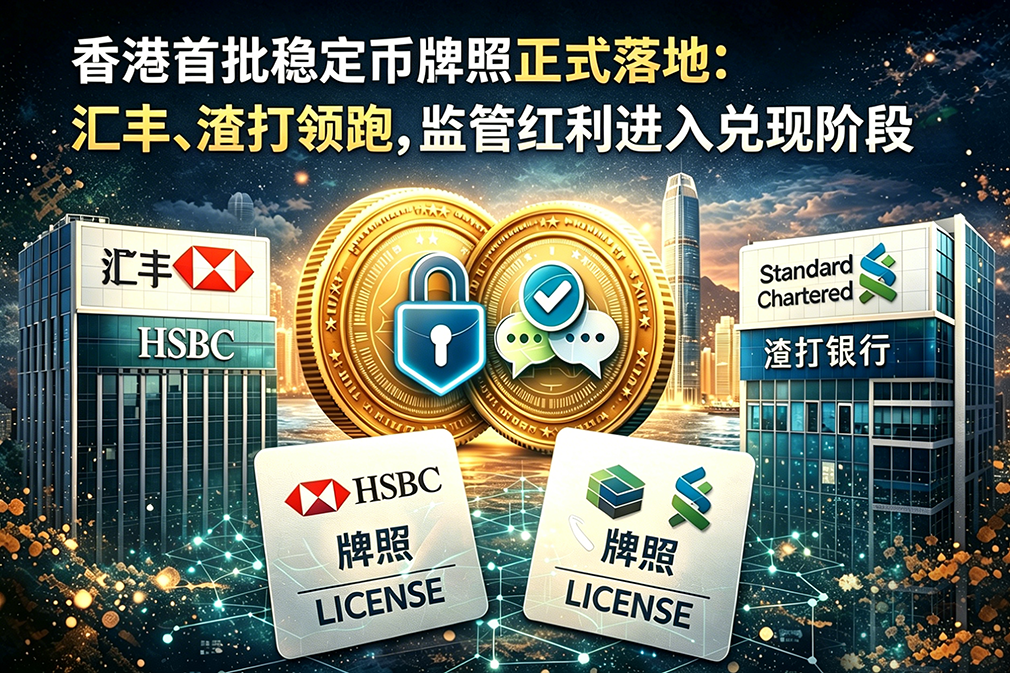
On April 10, 2026, the Hong Kong Monetary Authority (HKMA) officially announced the issuance of the first batch of stablecoin issuer licenses, marking a significant step forward in the implementation of Hong Kong's digital asset regulatory system. This is not only a policy signal but also a key watershed moment in the global stablecoin competition landscape.
The first batch of licensed institutions are:
Hongkong and Shanghai Banking Corporation
Standard Chartered Bank (consortium: Standard Chartered Bank + Anni Group + Hong Kong Telecom)
Previously, the market generally expected three institutions to be shortlisted, including the virtual asset trading platform OSL, but they ultimately failed to make it into the first batch of lists, indicating that the regulatory standards have become significantly stricter.
I. From "Policy Expectations" to "Institutional Implementation": Stablecoins Enter the Regulatory Era
The core context of this licensing is the first practical implementation of Hong Kong's Stablecoin Ordinance since it officially came into effect on August 1, 2025.
According to the Hong Kong Monetary Authority, a total of 36 applications were assessed in this round, with only 2 licenses ultimately issued, resulting in a success rate of less than 6%. This result once again confirms the clear signal previously released by the regulators:
👉 Stablecoin licensing will adhere to the principle of "few but excellent," rather than focusing on scale expansion.
Hong Kong Monetary Authority Deputy Chief Executive Chan Wai-man pointed out that the assessment criteria mainly revolve around four core dimensions:
Feasibility and credibility of the business model
Risk management capabilities and experience
The real value of application scenarios
Compliance capabilities (local and cross-border)
This means that stablecoins are no longer a "technological narrative," but rather a "competition for financial infrastructure licenses."
II. Why HSBC and Standard Chartered? The Underlying Logic Behind Institutional Success
In the end, the absolute dominance of traditional financial institutions was not accidental, but an inevitable result of regulatory guidance.
1) Compliance capabilities and global system advantages
Both HSBC and Standard Chartered Bank have the following features:
Global Clearing Network
Mature risk control system
Compliance experience in multiple jurisdictions
When stablecoins involve highly sensitive areas such as fund custody, cross-border flows, and anti-money laundering (AML), these capabilities become a core barrier to entry.
2) Clear application scenarios: From "hype tool" to "payment infrastructure"
The regulators have clearly emphasized "application value" rather than simply the ability to issue products.
Potential applications of bank-backed stablecoins include:
Cross-border trade settlement
Corporate Fund Management
Web3 compliant payment channels
RWA Asset Settlement Layer
In contrast, pure trading platforms have a significant weakness in their ability to connect with the real economy, which is one of the key reasons why OSL was not selected this time.
3) Risk Priority: Regulators Prefer "Controllable Innovation"
Hong Kong Monetary Authority Chief Executive Eddie Yue made a clear statement:
The core of stablecoin regulation is "striving for a balance between innovation and risk".
This means: 👉Prioritize players who "won't make mistakes," rather than the "most aggressive" players.
III. Market Impact: Three Major Structural Changes Are Underway
This issuance of licenses is not just about the licenses themselves, but will also have a profound impact on the entire crypto market.
1) Stablecoins are officially becoming "bank-like".
The right to issue stablecoins, from the previous:
👉 Crypto Native (USDT/USDC)
The shift is underway: 👉 Bank-led + Strong regulatory system
This will bring:
Credit system restructuring (bank credit replacing project credit)
User trust has significantly improved.
Compliant funds are entering the market at an accelerated pace.
2) Hong Kong becomes a global model for stablecoin regulation.
Globally:
United States: Regulation Remains Divided (SEC/CFTC Game)
Europe: MiCA in Progress
Hong Kong: Has taken the lead in completing the "legislation + licensing" closed loop
This gives Hong Kong a potential advantage: 👉 Becoming an Asian stablecoin issuance and clearing center
3) Restructuring of Web3 funding entry points
Stablecoins are the "liquidity foundation" of the entire crypto market.
This issuance of licenses means:
Compliant stablecoins will become the mainstream entry point for funds.
Non-compliant stablecoins face a squeeze
The DeFi/RWA/payments sector will benefit.
IV. Signals from those who haven't been issued licenses: The window is still open, but the threshold is extremely high.
Although only two companies were approved in the first batch, the regulatory window has not been completely closed.
The Hong Kong Monetary Authority clearly stated:
We will adopt an "open but cautious" attitude towards subsequent license issuance.
Even with additional share issuance, the total number will remain limited.
This sends two key signals:
👉 Opportunities still exist, but only for the top players . 👉 The industry is entering a phase where the strong get stronger.
V. Conclusion: Stablecoins have entered a "pricing power restructuring cycle".
From an industry perspective, the essence of this license issuance is not "good news," but rather:
A restructuring of the underlying rules.
The core impact can be summarized in three points:
1) Regulatory certainty in implementation
Stablecoins have moved from the gray area into the institutional system.
2) Institutions fully enter the market
Banks have become a core force in the issuance of stablecoins.
3) Market stratification intensifies
Compliant assets vs. non-compliant assets: valuation systems will diverge.
Techub News Opinions
This is not an ordinary regulatory news item, but rather:
👉The starting point for the global stablecoin competition to enter a "national-level track"
With Hong Kong taking the lead in completing the institutional loop, stablecoins will upgrade from "medium of exchange" to "financial infrastructure" and be deeply embedded in the financial system in the next 12–24 months.
Cross-border payments
Digital asset trading
RWA Real Assets
AI Agent Economic System
The real opportunity lies not in "who issues stablecoins," but in:
👉Who can restructure the financial and data circulation system around stablecoins?